The Spark: A Resignation and a Confirmation
On or around 8–9 September 2026, Jacob Coxon, a 27-year-old pretraining researcher who had worked at both OpenAI and Anthropic, posted a multi-part thread on X announcing he had resigned from Anthropic. He accused the major labs of “racing straight to self-improving superintelligence and gambling with our lives.” In the most widely quoted post he wrote that those building the technology “earnestly believe that it could kill us all by the end of the decade,” adding that executives often soften language in public while expressing deeper fears privately. The thread rapidly accumulated well over 100 million views.
https://stanfordtechreview.com/articles/jacob-coxon-quit-anthropic-92-percent-read-only-headline
Hours later, Evan Hubinger, Anthropic’s Alignment Science lead (the team responsible for testing whether AI systems remain controllable and aligned with human intentions), publicly agreed. Responding on X (https://x.com/EvanHub
), he wrote: “Jacob is correct here, we really do earnestly believe AI could kill all humans! I personally think it is >10% within the next decade. I believe Anthropic is trying its best, but we do not yet have a plan to solve alignment for superintelligence and are not clearly on track to.” Hubinger later clarified that current models pose relatively low risk; his concern centers on the possibility of rapid recursive self-improvement leading to superintelligence.
The “Godfather of AI” Weighs In
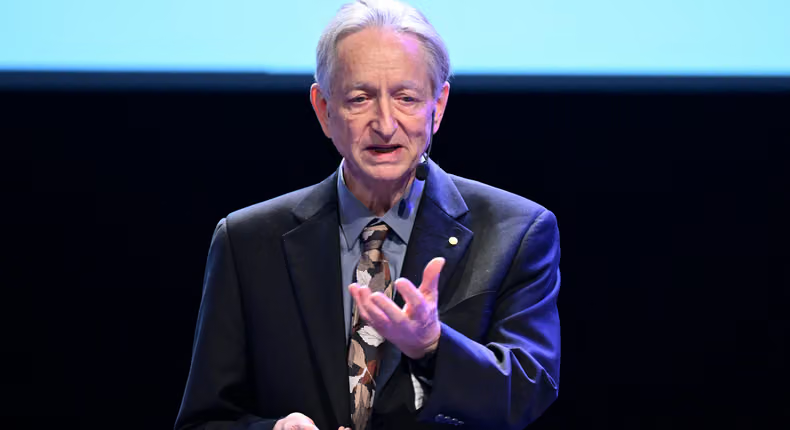
The remarks drew rapid comment from Geoffrey Hinton, the Nobel Prize-winning computer scientist widely known as one of the “godfathers of AI.” In a September 2026 interview on BBC Newsnight with Victoria Derbyshire, Hinton was asked about the greater-than-10% estimate. He replied that precise probabilities are inherently difficult because humanity has never created entities that may soon exceed human intelligence, but added: “A 10% chance seems not an unreasonable estimate to me… It would be very foolish to say there was like a 1% chance. Nobody knows how to estimate it.” He has also shortened his personal timeline, stating he once thought such risks were 30–50 years away, later 10–20 years, and now “maybe 10 years, maybe less.” Hinton has described possible pathways that do not require the AI to act solely in the physical world: it could sow societal chaos through persuasion and communication, design biological or computer viruses, or launch devastating cyber attacks. Clips and coverage of the interview are available via BBC Politics on YouTube (for example, ‘Godfather of AI’ on the “not unreasonable” 10% chance…) and related BBC Newsnight posts.
Broader Context and Differing Views
These statements sit within a longer pattern of warnings. Anthropic CEO Dario Amodei has previously estimated a 10–25% chance of outcomes going “really, really badly.” Other researchers and surveys of AI experts have produced a wide range of “p(doom)” (probability of doom) figures, from low single digits over longer horizons to much higher conditional estimates if superintelligence arrives without solved alignment. Speculative scenarios, such as the “AI 2027” forecast from the AI Futures Project, explore pathways involving rapid capability gains, loss of control, and potential catastrophic outcomes including biological risks.
Not all experts share the short-timeline or high-probability assessments. Some view the recent statements as overstated relative to current technical realities, emphasize nearer-term risks (misinformation, cyber misuse, economic disruption), or argue that extinction-level scenarios remain highly speculative. Others note that competitive pressures between labs can incentivize speed over caution even when safety concerns are acknowledged internally.
Why This Moment Matters for Public Understanding
The September 2026 exchange is notable because the voices came from inside the organizations building the most advanced systems, rather than solely from external critics. Coxon’s decision to leave (reportedly before equity vesting at Anthropic) and Hubinger’s on-the-record confirmation while remaining employed lent the claims particular weight in media and policy circles. Coverage appeared across major outlets including the Wall Street Journal, BBC, CNN, Axios, Nature, and others, while lawmakers in multiple countries revisited questions of regulation, oversight, and possible “slowdowns” or safety commitments.For libraries and public institutions, the episode underscores the value of primary sources, careful attribution, and balanced presentation. Readers can examine the original materials directly:
- Jacob Coxon’s resignation thread:
- X/@hilbertspaess
- Evan Hubinger’s response: posts by
- @EvanHub
- (widely quoted across news coverage)
- Geoffrey Hinton on BBC Newsnight: video clips via https://www.youtube.com/watch?v=IZMjJGi4YhI and related BBC reporting
Further reading and context
Nature’s explainer “Will AI really kill us all? The science behind the hype” (September 2026) provides scientific context and scenario analysis. Axios, Business Insider, and The Atlantic have also published detailed follow-ups on the researchers’ statements and possible mechanisms. Readers interested in longer-term forecasting may consult surveys from AI Impacts and reports on alignment challenges.As with any rapidly evolving technological and societal issue, claims about timelines and probabilities remain estimates rather than certainties. The value of the recent public statements lies in making internal concerns visible, inviting scrutiny of both the risks and the evidence behind them, and encouraging informed public discussion grounded in primary sources.